
ENGINEERED FOR THE PROCESS
Customized Rotary Valve
Customized rotary valves engineered around material behavior, capacity, pressure, temperature, interface dimensions and replacement requirements.
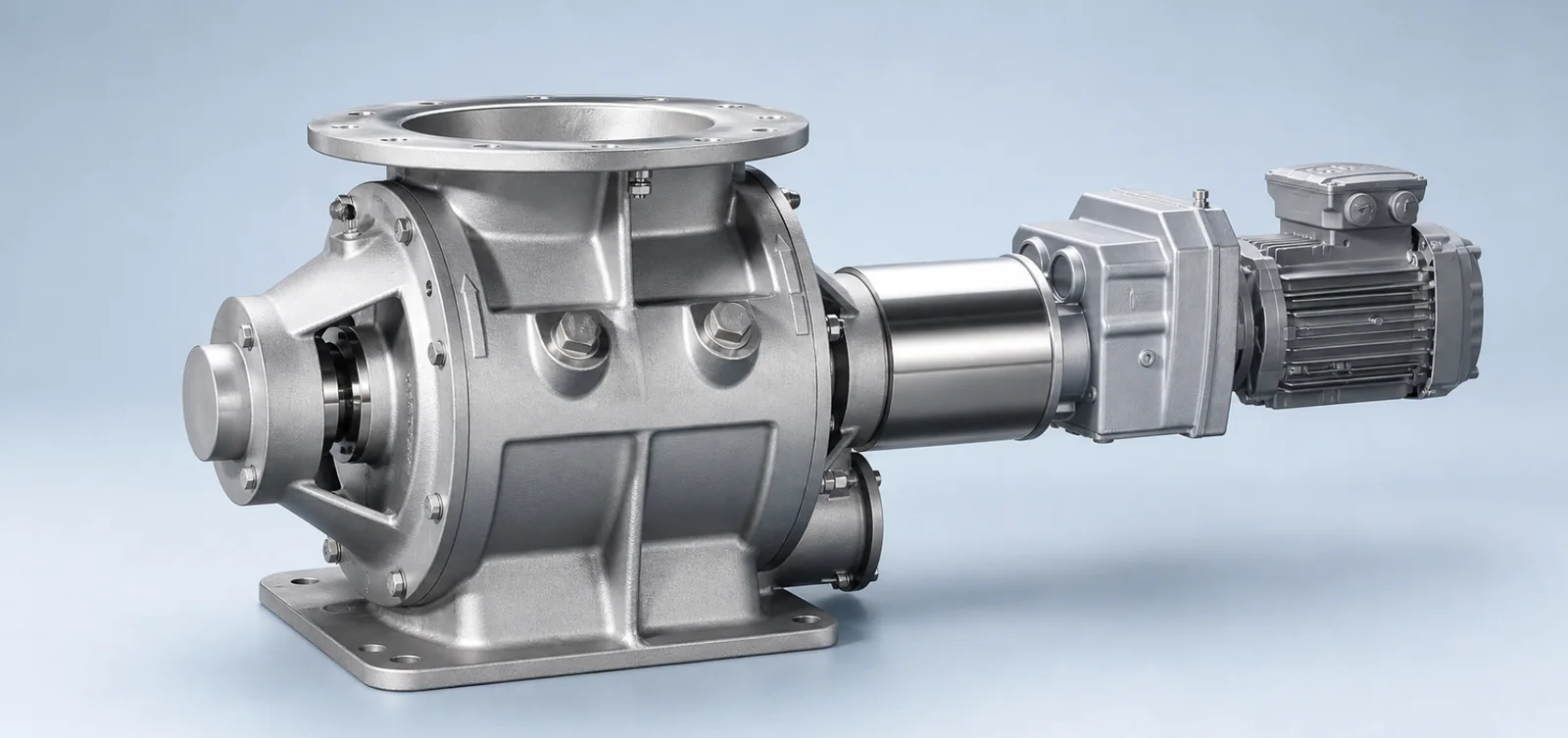
Customized Rotary Valve from Sercan Machinery
Our engineering team reviews the handled material, particle size, bulk density, capacity, temperature, pressure differential and installation interface before recommending a configuration. This reduces leakage, unstable feeding, wear and avoidable maintenance.
Typical configuration scope
- Custom inlet and outlet dimensions
- Rotor volume and blade configuration review
- Material, seal and clearance customization
- Drawing confirmation before manufacturing
Common applications
- Replacement for existing imported valves
- Non-standard flange or height limits
- Sticky or bridging powders
- High-temperature or special sealing requirements
Material options
- Carbon steel
- SS304 / SS316L
- Wear-resistant materials
- Customer-specified contact materials
APPLICATION NOTES
Engineering considerations for Customized Rotary Valve
The main design objective is matching a non-standard process interface or operating envelope. Confirm existing dimensions, material data, pressure, temperature and drive requirements before fixing the valve size, rotor and drive arrangement.
A drawing review before manufacture prevents site modifications and shortens replacement installation time. Sercan reviews these details against capacity, installation interface and maintenance access before issuing a project drawing.
Recommended project checks
- Provide representative material and bulk density data.
- State normal and maximum temperature and pressure conditions.
- Confirm flange dimensions, available height and drive orientation.
- Define the expected duty cycle and maintenance target.
TECHNICAL FAQ
Questions before selection
Can the valve match an existing brand or model?
Yes. Send the existing model, nameplate, interface dimensions and operating conditions.
Which information affects capacity?
Rotor volume, speed, filling efficiency and bulk density all affect output.